
Wednesday, August 09, 2006
Want a free book?
... Debra Hamel's got a deal. Book giveaway: Francine Prose, Reading Like a Writer (Hat tip, Maxine Clarke.)

Virginia Woolf live ...
... on the BBC Four - Audio Interviews - Virginia Woolf. (Hat tip, Maxine Clarke.)
Talk about poetry ...
... poets Andrew Hudgins and Charles Bernstein will be on QuickMuse tonight at 9:30. If you listen in and care to comment, go to the QuickMuse Forums.
And if you want to know more about QuickMuse, take a look at The Brains Behind: QuickMuse.
And if you want to know more about QuickMuse, take a look at The Brains Behind: QuickMuse.
This is wonderful ...
... The Politics of Alcohol. (Hat tip, Dave Lull.)
"Perhaps the problem is that nobody really knows what left or right opinions are any more." Exactly.
I think I know something about drinking, having done it on a heroic scale for upwards of 30 years (until a serious lapse of memory led me to give it up). Grand theories derived from drunken outbursts are invariably twaddle. My drinking buddies and I used to have a rule that you simply didn't bring up the next day the outrageous things said the night before. It was understood that they were what they were - drunken ravings, the mind gone berserk - and should be forgotten as quickly as possible. If I am convinced of anything it is that there is no veritas in vino.
"Perhaps the problem is that nobody really knows what left or right opinions are any more." Exactly.
I think I know something about drinking, having done it on a heroic scale for upwards of 30 years (until a serious lapse of memory led me to give it up). Grand theories derived from drunken outbursts are invariably twaddle. My drinking buddies and I used to have a rule that you simply didn't bring up the next day the outrageous things said the night before. It was understood that they were what they were - drunken ravings, the mind gone berserk - and should be forgotten as quickly as possible. If I am convinced of anything it is that there is no veritas in vino.
Theodore Dalrymple wonders ...
... Who cares? (Hat tip, Dave Lull.) It would be interesting to hear an exchange between Dalrymple and George Scialabba.
Something to read with your latte?
... Starbucks adding books to retail offerings. (Hat tip, Dave Lull.)
Ortega y Gassett ...
... wasn't the only one to divide people into two groups. Brandyinw Books looks at Two Types of People. (Hat tip, Maxine Clarke.)
Just for laughs ...
... you may want to contribute a suggestion to Scott Stein's What's So Funny?
Among books that I think would make just about anybody not humor-challenged laugh, there's Waugh's Decline and Fall, and Peter De Vries's twinned novellas Witches Milk and The Cat's Pajamas. (One of the two features a character who invents useless end products, one of which is after-shaving mints.) There is also an extremely funny essay by the unfortunately forgotten Frank Moore Colby called "Confessions of a Gallomaniac."
Among books that I think would make just about anybody not humor-challenged laugh, there's Waugh's Decline and Fall, and Peter De Vries's twinned novellas Witches Milk and The Cat's Pajamas. (One of the two features a character who invents useless end products, one of which is after-shaving mints.) There is also an extremely funny essay by the unfortunately forgotten Frank Moore Colby called "Confessions of a Gallomaniac."
A good book review ...
... is one that lets you know enough about the book underreview and the reviewer
s reasons for liking or disliking it to enable you to make up your own mind. Scott McLemee's review of George Scialabba's Divided Mind is just such. Scott obviously like the book. I doubt if I would.
I find this interesting:
“The most radical division it is possible to make of humanity,” Ortega y Gasset declares, “is that which splits it into two classes of creatures: those who make great demands on themselves, piling up difficulties and duties; and those who demand nothing special of themselves, but for whom to live is to be every moment what they already are, without imposing on themselves any effort toward perfection; mere buoys that float on the waves.”
Something in Ortega y Gasset’s statement must have struck a chord with Scialabba. He quotes it in two essays. “Is this a valid distinction?” he asks. “Yes, I believe it is....” But the idea bothers him; it stimulates none of the usual self-congratulatory pleasures of snobbery. The division of humanity into two categories — the noble and “the masses” — lends itself to anti-democratic sentiments, if not the most violently reactionary sort of politics.
At the very least, it undermines the will to make egalitarian changes. Yet it is also very hard to gainsay the truth of it.
I am very fond of Ortega y Gassett. But here I think he got things wrong by posing a false dichotomy. One of the demands one must make on oneself involves understanding who one is, what one's limitations are, and working within them. The hidden assumption here is that tormenting thoughts somehow make one more authentic than the poor schlub who just gets up every morning, goes to work and earns a living for his family. Therein lies the source of "the anti-democratic sentiments" likely to afflict intellectuals, by whom I mean people who see life principally in terms of categories of thought.
s reasons for liking or disliking it to enable you to make up your own mind. Scott McLemee's review of George Scialabba's Divided Mind is just such. Scott obviously like the book. I doubt if I would.
I find this interesting:
“The most radical division it is possible to make of humanity,” Ortega y Gasset declares, “is that which splits it into two classes of creatures: those who make great demands on themselves, piling up difficulties and duties; and those who demand nothing special of themselves, but for whom to live is to be every moment what they already are, without imposing on themselves any effort toward perfection; mere buoys that float on the waves.”
Something in Ortega y Gasset’s statement must have struck a chord with Scialabba. He quotes it in two essays. “Is this a valid distinction?” he asks. “Yes, I believe it is....” But the idea bothers him; it stimulates none of the usual self-congratulatory pleasures of snobbery. The division of humanity into two categories — the noble and “the masses” — lends itself to anti-democratic sentiments, if not the most violently reactionary sort of politics.
At the very least, it undermines the will to make egalitarian changes. Yet it is also very hard to gainsay the truth of it.
I am very fond of Ortega y Gassett. But here I think he got things wrong by posing a false dichotomy. One of the demands one must make on oneself involves understanding who one is, what one's limitations are, and working within them. The hidden assumption here is that tormenting thoughts somehow make one more authentic than the poor schlub who just gets up every morning, goes to work and earns a living for his family. Therein lies the source of "the anti-democratic sentiments" likely to afflict intellectuals, by whom I mean people who see life principally in terms of categories of thought.
Books that are hard ...
... to pigeonhole: Kit Whitfield's top 10 genre-defying novels. (Hat tip, Vikram Johri, who suggests that The Blind Assassin is another such.)
Tuesday, August 08, 2006
You will have noticed ...
... that blogging has been light today. Much to do and only so much time in which to do it. Which is why I am signing off now, to resume reading The Three Musketeers.
OK, so Dumbledore is dead ...
... what's to prevent him from coming back to life? This is about magic, right? Sorry - I was just speculating. I'll be quiet, so you can read Crime fiction and Harry (again) at Petrona.
At the GOB ...
... Oddments. I once introduced Peter Straub at a book fair and he told the people assembled something I think was interesting, that the writer of fiction must pay attention to all of the characters in his tale, the peripheral ones as well as those the writer is planning to focus on, because from time to time, he said, you'll notice one of those characters on the sidelines waving his arms and shouting at you, "Forget about that guy! I'm the one you want to write about." And, Peter said, you'd do well to pay attention.
A sad coincidence ...
... Michael Sellers, the son of Peter Sellers whose memoirs painted the actor as a spiteful and neglectful parent, has died.
Ordinarily, I would not have linked to this, if only because I was never much of Peter Sellers fan. What struck me was this: "Michael Sellers died during surgery on July 24 following a heart attack; his father died from the same cause 26 years earlier to the day."
Ordinarily, I would not have linked to this, if only because I was never much of Peter Sellers fan. What struck me was this: "Michael Sellers died during surgery on July 24 following a heart attack; his father died from the same cause 26 years earlier to the day."
I have had mixed reactions ...
... to David Mamet's work. I didn't particularly like Glengarry Glen Ross, but House of Games is one of my favorite movies.
This column of his in the Chicago Tribune, however, deserves to become a classic: Bigotry pins blame on Jews.
This column of his in the Chicago Tribune, however, deserves to become a classic: Bigotry pins blame on Jews.
For writers ...
... things may be worse than they think: Chasing the Long Tail. (Hat tip, Maxine Clarke.)
I'm not sure if writing a good book has ever been quite enough. "I returned, and saw under the sun, that the race is not to the swift, nor the battle to the strong, neither yet bread to the wise, nor yet riches to men of understanding, nor yet favor to men of skill; but time and chance happeneth to them all."
I'm not sure if writing a good book has ever been quite enough. "I returned, and saw under the sun, that the race is not to the swift, nor the battle to the strong, neither yet bread to the wise, nor yet riches to men of understanding, nor yet favor to men of skill; but time and chance happeneth to them all."
Builder, spare this library ...
Becky, over at A Book a Week posted this a while back: What Should a Library Look Like? I wonder if the Haddonfield Library was one of those funded by Andrew Carnegie, as was the Holmesburg Library where I spent many a happy time as a kid. Both the Holmesburg Library and the Haddonfield, in my view, look the way libraries should.
Monday, August 07, 2006
It's too hard to choose ...
... from among all the goodies at Grumpy Old Bookman, so just scroll down. Which leaves me free t0 sign off for tonight. I spent the day finishing one review left over from last week and another due this week. Mere journalism, I concede, but my brain is weary nonetheless. So I'm going to spend the rest of the night with The Three Musketeers.
The lamest generation ...
... Warning: Men Not Working . I liked this part: "They are turning down jobs they think beneath them ... even as an expanding economy offers opportunities to work."
If I need money and you offer me a job I can assure you I won't regard said job as beneath me.
If I need money and you offer me a job I can assure you I won't regard said job as beneath me.
The MSM vs. blogs ...
... or something like that. Glenn Reynolds considers a plug and conflation - and related matters.
Where's the outrage ?
Maxine considers News values. Now if we could get the guy transferred to Gitmo ...
Blog less ...
... to greater effect. So opines Eric Kintz: Why Blog Post Frequency Does Not Matter Anymore. (Via Cogito, ergo Boom.)
Well, yesterday afternoon I decided to take a break from blogging, for no better reason than that I was feeling lazy. I always tend to go with an impulse like that, because it's an unsual one for me, and I figured I must be trying to tell myself something. At any rate, I think a lot of what Kintz says is true. But much depends on the kind of blogging you do. I tend to post links to things I've come upon that I found interesting and think others may as well. Only every now and again do I have something more elaborate to say.
Well, yesterday afternoon I decided to take a break from blogging, for no better reason than that I was feeling lazy. I always tend to go with an impulse like that, because it's an unsual one for me, and I figured I must be trying to tell myself something. At any rate, I think a lot of what Kintz says is true. But much depends on the kind of blogging you do. I tend to post links to things I've come upon that I found interesting and think others may as well. Only every now and again do I have something more elaborate to say.
Also from India ...
... Vikram Johri sends this link to Harry Potter and the mystery of an academic obsession.
Vikram cites this passage in particular:
A Berkeley professor called Frederick Crews did a rather gentle lampoon of literary criticism back in the Sixties called Pooh Perplex, a collection of essays purporting to be written by various academics on the subject of Winnie the Pooh. Then a few years ago he wrote a sequel, Postmodern Pooh, which included a paper on 'The Fissured Subtext: Historical Problematics, the Absolute Cause, Transcoded Contradictions, and Late-Capitalist Metanarrative (in Pooh) ' by a Marxist called Carla Gulag who compares Pooh to Chairman Mao.
Vikram's comment? "Oh my!" Indeed.
Vikram cites this passage in particular:
A Berkeley professor called Frederick Crews did a rather gentle lampoon of literary criticism back in the Sixties called Pooh Perplex, a collection of essays purporting to be written by various academics on the subject of Winnie the Pooh. Then a few years ago he wrote a sequel, Postmodern Pooh, which included a paper on 'The Fissured Subtext: Historical Problematics, the Absolute Cause, Transcoded Contradictions, and Late-Capitalist Metanarrative (in Pooh) ' by a Marxist called Carla Gulag who compares Pooh to Chairman Mao.
Vikram's comment? "Oh my!" Indeed.
Also on this date ...
... in 1940, Rabindrinath Tagore died. Here is a piece about him by Amartya Sen: Tagore and His India. And here are some Poems of Tagore.
On this date ...
... in 1868, the composer Granville Bantock was born in London. Highly regarded in his day, a friend of Sibelius and Richard Strauss, he is largely forgotten today. Which is really too bad, because his best music - such as the Celtic Symphony, written in 1940, which I am listening to right now - is wonderfully beautiful. Oh, I realize that it isn't enough nowadays for a piece of music to be simply lovely to listen to. But it's enough for me.
You can learn more about Bantock from A Brief Introduction to the Life and Work of Sir Granville Bantock by Vincent Budd.
You can learn more about Bantock from A Brief Introduction to the Life and Work of Sir Granville Bantock by Vincent Budd.
Sunday, August 06, 2006
Of time and reading ...
... and much else besides at Petrona: Teen heroes and writing about writing. I have managed to keep up with reading by eliminating a lot of others things. I watch very little TV, go to movies only very occasionally. Otherwise, it's reading, writing, editing and blogging. As long as I can punctutate that with a bit a gardening, cooking, and poetry, I'm content. Unlike Maxine, however, I am no longer involved in parenting.
Fellow St. Joe's alum ...
... Joe Queenan explains Why I Can’t Stop Starting Books . (Hat tip, Dave Lull.)
Today's Inquirer reviews ...
My colleague John Timpane - who is also a fine poet - has a great review today of Wislawa Szymborska's latest collection: Poet does it all 'wrong,' but she's so right.
I was really impressed by Bill Pronzini's latest: Tale of Mr. Wise's crimes transcends genre.
Phaedra Trethan, who was once my assistant, was thrilled by Roger Kahn's Into My Own: From a gentleman sportswriter.
Marc Schogol thinks Stephen O'Shea's Sea of Faith is a book for our times: Christian vs. Muslim: Bad times and good.
Carlin Romano was not at all bored by Lars Svendsen's A Philosophy of Boredom: Looking at boredom, but making it interesting.
Katie Haegele was much taken with Stephen Cole's Thieves Like Us: Young Adult Reader Criminal guru sends brainy misfit teens on a quest.
John Rossi thinks Sam Carchidi's biography of sportscaster Bill Campbell is a book and Philly fan will want: Bill Campbell and 60 years of sports in Philadelphia.
Henry Holcom looks at Rush Loving Jr.s' The Men Who Loved Trains: An inside look at Conrail's wild ride.
And, in case you missed it, there are more reviews at this earlier post: In this morning's Inquirer ...
I was really impressed by Bill Pronzini's latest: Tale of Mr. Wise's crimes transcends genre.
Phaedra Trethan, who was once my assistant, was thrilled by Roger Kahn's Into My Own: From a gentleman sportswriter.
Marc Schogol thinks Stephen O'Shea's Sea of Faith is a book for our times: Christian vs. Muslim: Bad times and good.
Carlin Romano was not at all bored by Lars Svendsen's A Philosophy of Boredom: Looking at boredom, but making it interesting.
Katie Haegele was much taken with Stephen Cole's Thieves Like Us: Young Adult Reader Criminal guru sends brainy misfit teens on a quest.
John Rossi thinks Sam Carchidi's biography of sportscaster Bill Campbell is a book and Philly fan will want: Bill Campbell and 60 years of sports in Philadelphia.
Henry Holcom looks at Rush Loving Jr.s' The Men Who Loved Trains: An inside look at Conrail's wild ride.
And, in case you missed it, there are more reviews at this earlier post: In this morning's Inquirer ...
Saturday, August 05, 2006
An interesting quiz ...
... in This really is taking things a bit too far... Gene Justice links to one that asks, "What kind of pirate are you?" He was rather taken aback by his results. Mine? I scored as Blackbeard. Imagine that.
Remember the brouhaha ...
... over the government wanting access to suspect persons' library records? This puts that nicely into context: A Word from D. Robert Brodsky.
I reviewed ...
Kenneth Harvey's The Town That Forgot How to Breathe in February and liked it a lot. So do the Italians. It's won the Libro del Mare award. In case your Italian is as feeble as mine, here's a translation:
HARVEY WINS ITALY'S 'LIBRO DEL MARE'
Newfoundland author Kenneth J. Harvey has become the first Canadian to win Italy's 'Libro del Mare' for his book The Town That Forgot How to Breathe (La città che dimenticò di respirare).
Harvey received the award in Sanremo, Italy on July 27th during a ceremony in the rooftop garden of the Sanremo Casino. A cheque for 5,000 Euros ($7,200) was also presented.
(for press photographs of the ceremony, please visit KennethJHarvey.com)
Sanremo is situated along the Italian Riviera, and neighbours Monte Carlo, Nice and Cannes.
The 'Libro del Mare' was conceived by renowned Italian literary figure and filmmaker, Fulco Quilici, and is presented each year
to the best book published in Italy which deals with the sea.
The Town That Forgot How to Breathe has been sold in over thirteen countries, and has been translated into French, German, Italian, Russian, Dutch and other languages.
HARVEY WINS ITALY'S 'LIBRO DEL MARE'
Newfoundland author Kenneth J. Harvey has become the first Canadian to win Italy's 'Libro del Mare' for his book The Town That Forgot How to Breathe (La città che dimenticò di respirare).
Harvey received the award in Sanremo, Italy on July 27th during a ceremony in the rooftop garden of the Sanremo Casino. A cheque for 5,000 Euros ($7,200) was also presented.
(for press photographs of the ceremony, please visit KennethJHarvey.com)
Sanremo is situated along the Italian Riviera, and neighbours Monte Carlo, Nice and Cannes.
The 'Libro del Mare' was conceived by renowned Italian literary figure and filmmaker, Fulco Quilici, and is presented each year
to the best book published in Italy which deals with the sea.
The Town That Forgot How to Breathe has been sold in over thirteen countries, and has been translated into French, German, Italian, Russian, Dutch and other languages.
The alternative ...
... to the mess and imprecison that is television is to have David Hiltbrand do the watching for you: Dave on Demand: Worshipping at Jon's altar.
Philosophy as porcess ...
... Simon Blackburn considers Plato's Republic: Voices of reason. (Hat tip, Rus Bowden.)
A couple of observations:
First, I think that Plato's indirect, dialectical presentation has much in common with Zen, itself a marriage of Buddhism and Taoism. The Tao that can be named is not the Tao. What is fundamentally true is one's authentic, living encounter with reality and that can never be fully, adequately put into words. To borrow from Eliot, "there is only the trying," we must grasp at hints and make, as best we can, guesses.
Second, I think that Plato's Republic is an example of sustained irony. We say we want a perfectly run society - and he describes one - and it is nothing any humane person could possibly desire. The point, in other words, is that we must put up with the mess and imprecision of life and society because the alternative is the prison of despotism.
A couple of observations:
First, I think that Plato's indirect, dialectical presentation has much in common with Zen, itself a marriage of Buddhism and Taoism. The Tao that can be named is not the Tao. What is fundamentally true is one's authentic, living encounter with reality and that can never be fully, adequately put into words. To borrow from Eliot, "there is only the trying," we must grasp at hints and make, as best we can, guesses.
Second, I think that Plato's Republic is an example of sustained irony. We say we want a perfectly run society - and he describes one - and it is nothing any humane person could possibly desire. The point, in other words, is that we must put up with the mess and imprecision of life and society because the alternative is the prison of despotism.
Friday, August 04, 2006
At Bud Bloom Poetry ...
... Sousa Marches In Where Mozart Fears to Fiddle . (As the proud possessor of a first-prize plaque for headline writing from the Society of Professional Journalists, I feel I can say with some authority that that is a good one.)
A splendid interview ...
... with John Banville: Adrift in a sea of his own making. (Hat tip, Dave Lull.)
In praise of one forgotten ...
... The literary oblivion of James Agee. (Hat tip, Dave Lull.)
We idolized him in college. And there is always Samuel Barber's masterpiece, Knoxville: Summer of 1915.
We idolized him in college. And there is always Samuel Barber's masterpiece, Knoxville: Summer of 1915.
Life after death ...
... fictional, that is: Dead Characters. (Hat tip, Maxine Clarke, who poses an "Interesting question. Catherine Earnshaw?" And isn't the protagonist of Alice Sebold's The Lovely Bones dead also?)
I'm not sure ...
... what to make of this, so I leave it up to you, dear readers: Comedians' charity poetry: Laugh? I nearly rhymed.
Dr. Johnson ...
... and the Deadline of Doom: New research indicates Johnson gave up on his dictionary . (Hat tip, Dave Lull.)
Every journalist will sympathize.
Every journalist will sympathize.
Publishers and the Internet (cont'd) ...
... HarperCollins Steps Up Its Presence on the Internet (Hat tip, Dave Lull.)
More on Elisabeth Schwarzkopf ...
... at About Last Night: Elisabeth Schwarzkopf, R.I.P.
Schwarzkopf was no saint, and maybe wasn't even a nice person, but regarding her Nazi affiliation, I think it worth noting that, unlike Colette and Cortot, she was only in her 20s when she joined the party. Michael Kennedy, the senior classical musical critic of the Daily Telegraph, makes a point worth pondering in Richard Strauss: Man, Musician, Enigma. "I lived through the whole of the Nazi period," he writes. "I have vivid recollections of [those] years . . . and know how different attitudes to the Nazis were. . . . I find insufferable the smug holier-than-thou attitude of people who know with such certainty how honorably and courageously they would have behaved. "
On the other hand Terry's point about beautiful art being made by ugly souls is worth pondering, too.
Schwarzkopf was no saint, and maybe wasn't even a nice person, but regarding her Nazi affiliation, I think it worth noting that, unlike Colette and Cortot, she was only in her 20s when she joined the party. Michael Kennedy, the senior classical musical critic of the Daily Telegraph, makes a point worth pondering in Richard Strauss: Man, Musician, Enigma. "I lived through the whole of the Nazi period," he writes. "I have vivid recollections of [those] years . . . and know how different attitudes to the Nazis were. . . . I find insufferable the smug holier-than-thou attitude of people who know with such certainty how honorably and courageously they would have behaved. "
On the other hand Terry's point about beautiful art being made by ugly souls is worth pondering, too.
Check out ...
... John Freeman's Friday Round Up at Critical Mass. (Interesting remarks about Critical Mass at Petrona, in a very ego-boosting discussion of my interview: Frank Wilson interview. Maxine knows of my medieval predilections. Like Miniver Cheevy, I "miss the medieval grace of iron clothing."
Some links I just noticed ...
... at Amy Nelson-Mile's Books, Words, and Writing:
Digital Medievalist
Got Medieval
In the Middle
One of the things I like about the Middle Ages is that they never complained about how warm it was.
Digital Medievalist
Got Medieval
In the Middle
One of the things I like about the Middle Ages is that they never complained about how warm it was.
Penguin is the latest publisher ...
... to launch a blog. It is called, appropriately enough, The Penguin Blog. (Hat tip, Vikram Johri.)
It's only make believe ...
... Vikram Johri sends along links to new fiction at the Guardian: Colm Toibin's A Summer Job and William Boyd's The Diarists.
Thursday, August 03, 2006
Global warming ...
... gives a pass to South Africa: S. Africans shiver through harsh winter . Never forget: There's another hemisphere.
I know nothing ...
... about any of these people. But it all sounds deliciously sleazy, doesn't it? The GOB presents Stirring times for Michael Barrymore.
I am listening ...
... to Elisabeth Schwarzkopf singing in the final scene of Strauss's Der Rosenkavalier. Oh what a splendid Marchallin she was! Elisabeth Schwarzkopf died today at age 90. Here is the Times of London obit and here is the Daily Telegraph's.
I've never liked them myself ...
... but I think many people would be alarmed over the prospect of The Last Peanut.
Retreat ...
... to the home of the Welsh Wizard: For writers who want a quiet week away, just to write...
You gotta know when to hold ...
... fold, walk away, or run.Today is the anniversary of Wild Bill Hickock's murder: The dead man's hand. (Hat tip - Maxine of all people!)
English, Irish, and the New York Times ...
... NY Times on Irish: No improvement on Safire. (Hat tip, Maxine Clarke.)
The best books ...
... 100 of them, chosen by Penguin: Our pick of the perfect Penguins. (Via Critical Mass.)
But notice that one of the categories is The Best Minxes - and our favorite Minx isn't even mentioned!
But notice that one of the categories is The Best Minxes - and our favorite Minx isn't even mentioned!
Books for acid heads ...
... John Higgs' top 10 psychedelic non-fiction. The best of the bunch is Wolfe's. (Hat tip, Vikram Johrin, who also sends a link to The Subtle Science Short Story challenge.
I note that the web page for Higgs's book refers to Leary as a "brilliant Harvard psychologist." He held a lecturesip at Harvard for what? Two years? The guy's academic credentials were spotty at best. What he was was a hustler. The '60s were a boom time for hustlers.
I note that the web page for Higgs's book refers to Leary as a "brilliant Harvard psychologist." He held a lecturesip at Harvard for what? Two years? The guy's academic credentials were spotty at best. What he was was a hustler. The '60s were a boom time for hustlers.
A fellow we English-speakers ...
... know far too little about: Johann Wolfgang von Goethe, the boy poet .
Wednesday, August 02, 2006
Today's poem ...
... is by Lisa Janice Cohen: Scheherazade's Last Tale. It appears in the August issue of Stirring.
Something else ...
... Patrick Kurp and I have in common: A fondness for R.B. Kitaj - Writing Painting, Painting Books.
Maxine has a proposal ...
... read about it in Paid-for shortlists. Allow me to be the first to second it.
To each his own ...
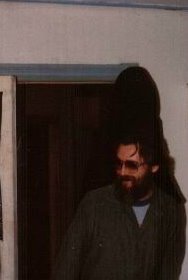
... The decade when taste flourished. (Another hat tip to Dave.)
The '70s. Well, every decade has something to offer. But I'm sort of glad I no longer look like this.
Grading books ...
... One at a Time. (Hat tip again to Dave Lull.)
I'm not sure if any book has changed my life exactly - though Donald Newlove's Those Drinking Days may have, now that I come to think of it. Like Terry, I read a lot of books that I like more than once (at least I used to, before I got this job). But the book I guess I read most often is The Collected Poems of Wallace Stevens. But I suppose if I had to take only one with me to a desert island, I'd pick Montaigne, too. Lots of books have made me laugh, but none more than Anthony Burgess's Inside Mr. Enderby. Lots of books have made me cry, too, but the one that comes to mindjust now is A.S. Byatt's Possession. Wanting to write a book someone else has written is too much like wanting to be somebody else and I've never wanted to be anybody but me. I suppose I wish The Da Vinci Code because it's so depressing that such tripe would prove so popular. But not really - at least Dan Brown isn't teaching kids how to write anymore. Tonight I will finish Carlo Lucarelli's Carte Blanche and tomorrow begin The Three Musketeers. And one of these I'm going to get to Proust.
I'm not sure if any book has changed my life exactly - though Donald Newlove's Those Drinking Days may have, now that I come to think of it. Like Terry, I read a lot of books that I like more than once (at least I used to, before I got this job). But the book I guess I read most often is The Collected Poems of Wallace Stevens. But I suppose if I had to take only one with me to a desert island, I'd pick Montaigne, too. Lots of books have made me laugh, but none more than Anthony Burgess's Inside Mr. Enderby. Lots of books have made me cry, too, but the one that comes to mindjust now is A.S. Byatt's Possession. Wanting to write a book someone else has written is too much like wanting to be somebody else and I've never wanted to be anybody but me. I suppose I wish The Da Vinci Code because it's so depressing that such tripe would prove so popular. But not really - at least Dan Brown isn't teaching kids how to write anymore. Tonight I will finish Carlo Lucarelli's Carte Blanche and tomorrow begin The Three Musketeers. And one of these I'm going to get to Proust.
I got a call this morning ...
... from Vikram Johri in Delhi. What a perfectly delightful young man he is. And he'd like nothing better than to come and stay with us for a while. So if you know of an opening for a bright, well-read, highly articulate and computer literate fellow in the field of literary journalism, drop him a line. You can find his email address at his blog, Patrakaar2b
Who knew?
... Darwin only liked happy endings: "Consolation" by Wislawa Szymborska. (Hat tip, Dave Lull, who also caught the typo in Darwin's name.)
Common sense alert ...
... Scott Stein treads where many fear to: This Is Not Chick Lit, or, What Gloria Steinem Doesn't Know Could Fill a Book. As Glenn Reynolds would say, indeed.
More on this here (which also cites Scott): Brainy Broads Challenge Chicks; Blog Blowhard Blurts: "Baloney!"
Also check out Literary Snobs Looking for Love.
And how the hell did I manage to miss Scott's blog for so long?
More on this here (which also cites Scott): Brainy Broads Challenge Chicks; Blog Blowhard Blurts: "Baloney!"
Also check out Literary Snobs Looking for Love.
And how the hell did I manage to miss Scott's blog for so long?
Subscribe to:
Posts (Atom)